Do You Need a Permit for a Bounce House in North Texas?
For a birthday party in your own yard, you almost never need a permit. For a public park, you usually do need something, whether that is a facility reservation, a special event permit, or both, and the requirements are set city by city. Nothing in this article tells you what your city’s rule is. It tells you who to call and what they will probably ask for.
At a private home
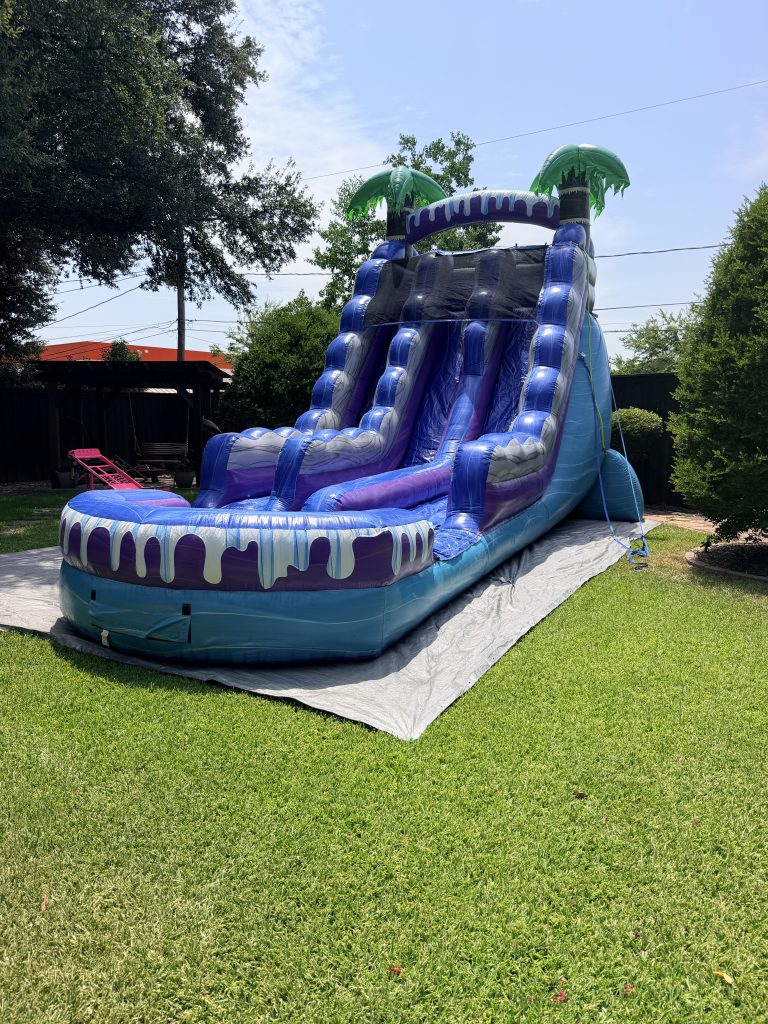
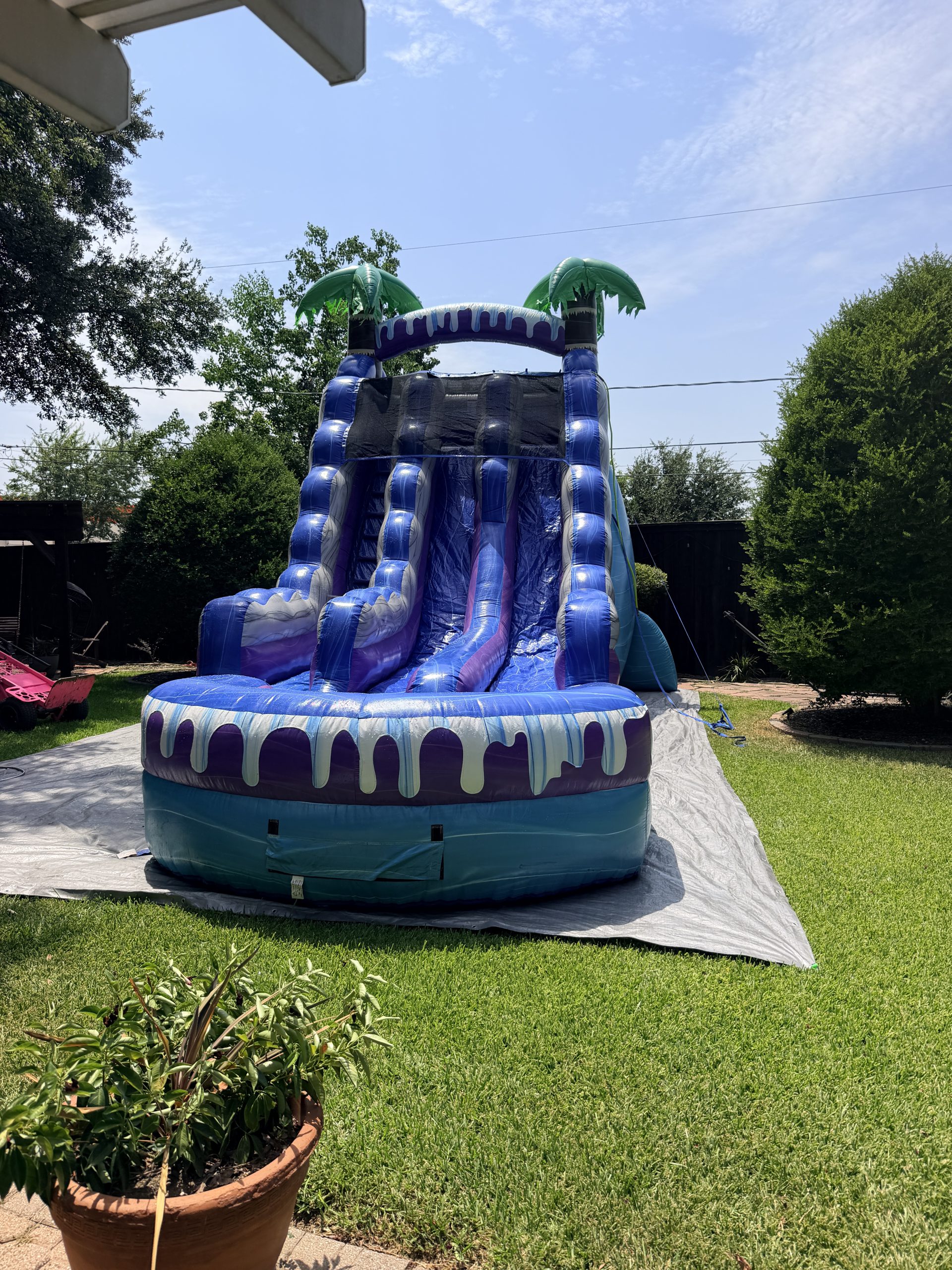
A bounce house on your own property for a private family party is generally treated as a temporary use and not a permitted event. The things that can complicate that are not usually permits at all:
- Your HOA may have rules about placement, hours or noise. That is a private agreement, not a city permit, and it is enforced separately.
- Anything that spills into the public right of way, such as a unit anchored on the sidewalk or a setup that blocks a footpath or a fire lane, can become the city’s business.
- Blocking a street, or closing one for a block party, is its own permit in most cities.
- If you are hosting something that is not really a private party, such as a fundraiser, a business promotion, or an event advertised to the public, the picture changes and you should ask.
If any of those apply to you, call your city and ask rather than guessing. It is a short phone call.
The state layer, and what to ask your rental company
Texas regulates amusement rides at the state level, and inflatables fall under that. In practical terms it means a legitimate operator carries liability insurance and has units inspected on a regular schedule, with documentation to show for it. That obligation sits with the rental company, not with you.
What you should do is ask to see it. A current certificate of insurance and current inspection paperwork should be easy for the company to produce, and a good one will offer it before you ask. Requirements and coverage amounts change over time, so let the company show you their current documents rather than taking numbers from any article, including this one. If a company cannot or will not show you anything, that is your answer about whether to book them.
Public parks
This is where permits genuinely come into it, and where the answer is different in every city and sometimes different between parks in the same city. Do not rely on what a friend did in a different city last year.
Call or email the parks and recreation department for the city that owns the park. What they typically ask about:
- A reservation for a specific pavilion, shelter or area, on a specific date and time window, usually with a fee.
- Whether inflatables are allowed at all in that park. Some parks allow them, some do not, and some allow them only in designated areas.
- Proof of insurance from the rental company, often a certificate naming the city as an additional insured. This takes the vendor a few business days to produce, so ask early.
- Vendor approval. Some departments keep a list of vendors they have already cleared and will only accept those.
- Anchoring rules. Parks have irrigation lines, utilities and turf they care about. Staking is often restricted or prohibited, which means weighted anchoring instead, which means more equipment and a different price.
- Power. Many park sites have no outlet, so you need a generator, and generators have their own rules about placement, noise and fuel.
- Attendance, amplified sound, food vendors and inflatable size, any of which can push a simple reservation into a special event permit.
Ask one more question while you have them: what is the deadline. Reservations for spring and fall weekends in North DFW parks go quickly, and permit review takes time on top of that.
Schools
School property is the district’s, and the process is a district facility use process, not a conversation with the principal. Expect a facility use application, a certificate of insurance naming the district, and possibly a requirement that a district employee be present. Many districts also maintain approved vendor lists and require vendors to be registered before they can set foot on campus. PTA and booster events run through the same channel. Start with the campus office, but expect to be routed to a district facilities or risk management contact, and give it several weeks.
Churches and other private venues
A church, a private club or a rented hall is private property, so no city permit is usually involved. What matters instead is the venue’s own policy and its insurance carrier. Ask the facilities manager or the church office, not just the volunteer organising the event, because the person planning it often does not know what the insurer requires. Common requests are a certificate of insurance naming the venue, an agreement about who supervises, and rules about where anchoring is allowed, particularly on lawns with irrigation or over parking lots.
HOA common areas
A neighbourhood pool, park or clubhouse lawn is private property that belongs to the association. That means board approval rather than a city permit, and associations frequently want the same insurance certificate a city would ask for. Board approval can take longer than a city permit because boards meet on a schedule.
A short planning sequence
- Work out who owns the land. City, school district, church, HOA or you.
- Call that owner and ask what they require, in those words, and ask for it in writing.
- Pass the exact requirements to your rental company as early as you can, especially anything naming an additional insured.
- Ask about power and anchoring surface at the same time, because those change what can be delivered.
- Give yourself weeks, not days. Certificates and reservations both run on other people’s calendars.
One thing to do even at home
Before anyone drives a stake, know where your sprinkler lines, low-voltage lighting and any shallow utilities run, and tell the setup crew. Anchors are not deep, but they are deep enough to find an irrigation line. If you are unsure about buried utilities on your property, the free 811 locate service exists for exactly this and it costs nothing to use.
The short version
- Home party in your own yard: usually no permit, but check your HOA.
- Public park: usually a reservation and often more, and it varies by city. Call the parks department.
- School: district facility use process and insurance naming the district.
- Church or private venue: their policy and their insurer, not the city.
- Always ask your rental company for current insurance and inspection documentation.
- Every rule here differs by jurisdiction. Verify with your own city before you book.
InflatableTX is family-run and works across North DFW, including The Colony, Frisco, Plano, Lewisville, Little Elm, Denton, Flower Mound and Carrollton, and we can send whatever insurance paperwork a park, school or venue asks for. Take a look at what we have available and let us know where you are planning to set up.