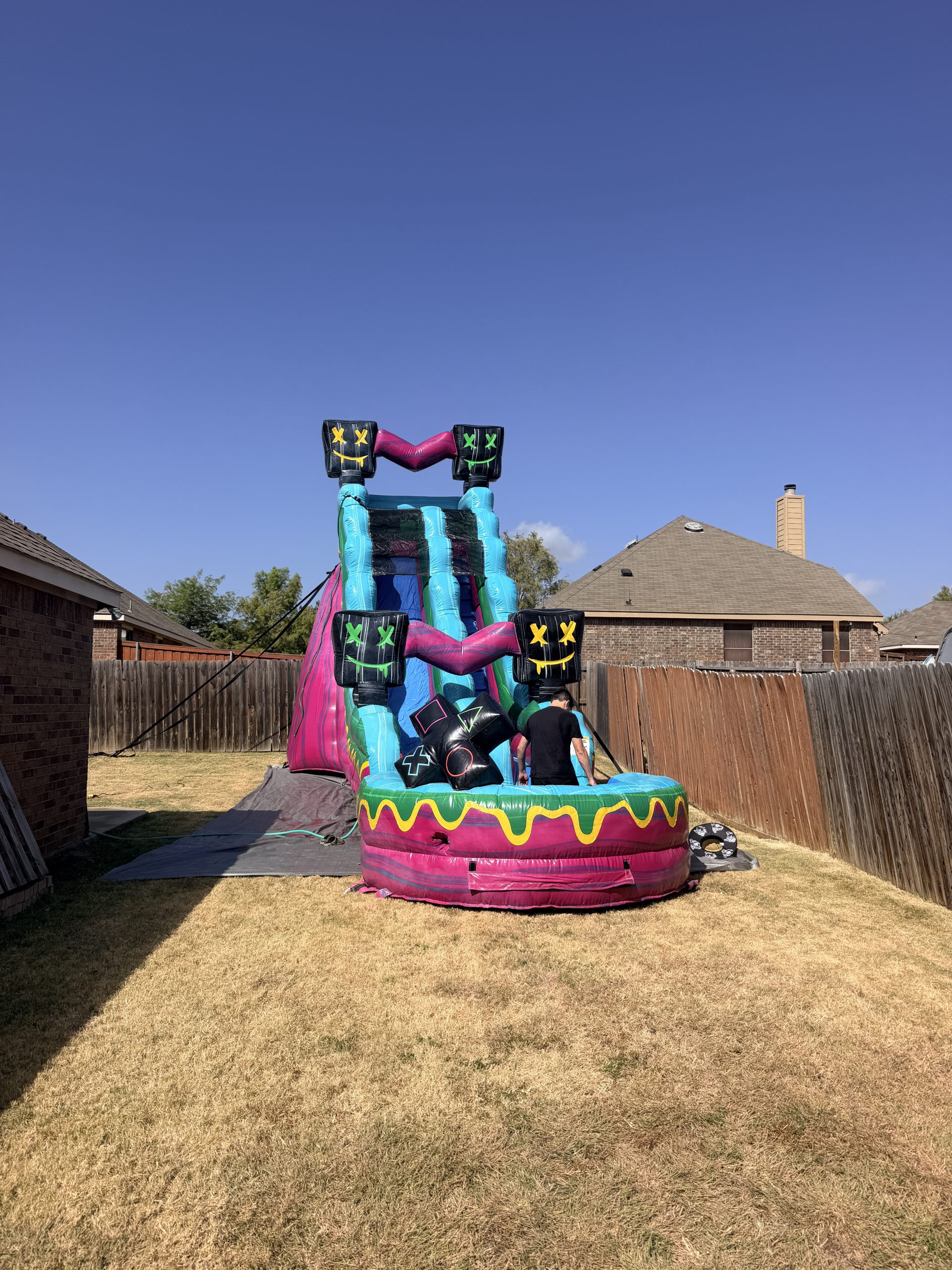
15 Foot vs 20 Foot Water Slide: What the Height Actually Means
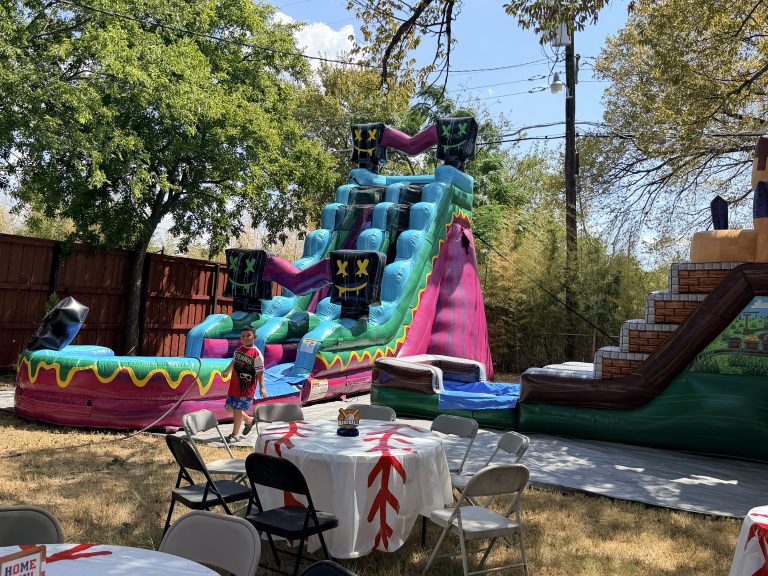
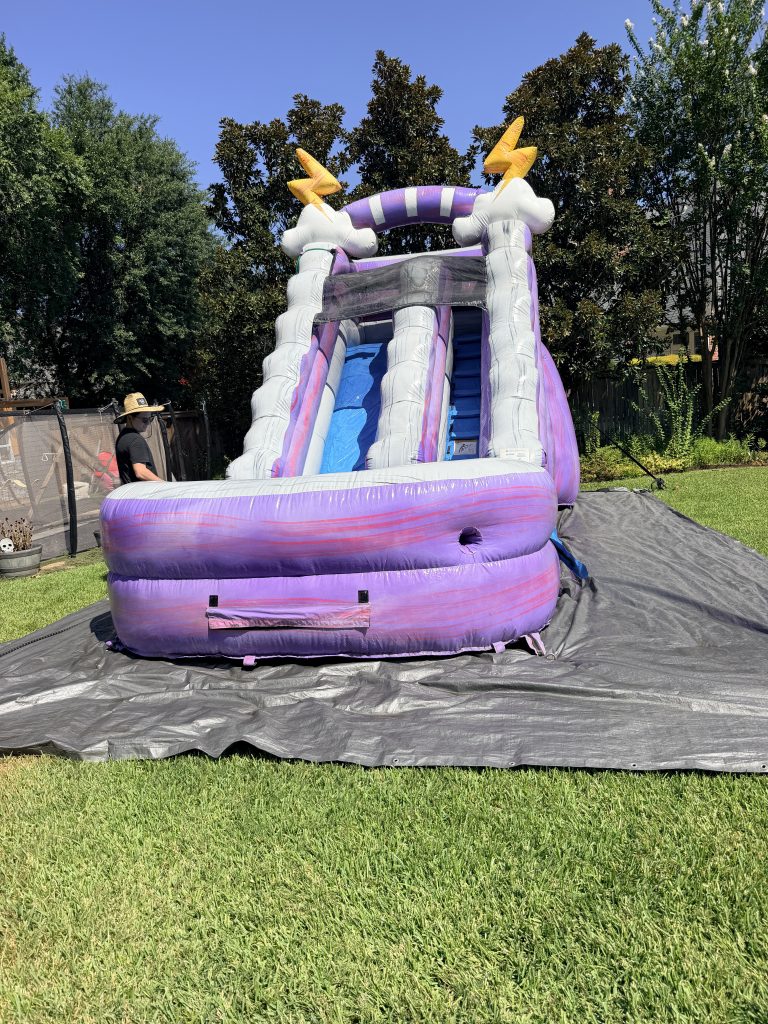
The number on an inflatable water slide is its height, not the length of the sliding surface. A 20 foot slide is not slightly bigger than a 15 foot slide. It is a longer, harder climb, a steeper drop, and noticeably more speed at the bottom. It also needs more yard and more clear air above it.
Bigger is not automatically better. The right choice depends on who is actually coming to your party.
What the measurement refers to
In general, the advertised height is the overall height of the unit at its tallest point. That is usually the top of the climbing tower, not the top of the slide chute itself, and different manufacturers measure in slightly different places. Because of that, treat the headline number as a category, not a spec.
Before you book, ask the rental company for the actual dimensions of the specific unit: overall height, total length including the runout, and total width. Those three numbers are what determine whether it fits your yard.
What it feels like to ride
The climb
The climb is the part parents underestimate. An inflatable slide is climbed up a vertical or near-vertical inflatable wall using soft handholds and footholds. It is genuinely tiring, and kids do it over and over. On a 15 foot unit, most children from about five or six up can manage it after a couple of tries. On a 20 foot unit, the climb is longer, the wall is taller, and smaller kids often stall halfway and need help, which is exactly where you do not want an adult reaching.
The rule of thumb worth using: if a child cannot climb it on their own, they should not be riding it. Being carried or pushed up a slide tower is not a safe way to use one.
The speed
More height means more speed at the bottom. A 15 foot slide gives most kids a fast, fun ride that ends comfortably. A 20 foot slide gives you a real drop, and riders arrive at the runout carrying serious momentum. That is exactly the appeal for older kids, and exactly the problem for younger ones, who are more likely to lose position on the way down.
The landing
Taller slides need a longer, better-managed runout, whether that is a splash pool or a long slide lane. It also means the one-rider-at-a-time rule stops being a nicety and becomes essential. On a 20 foot unit, a rider coming down onto someone still sitting at the bottom is a real collision.
Age and size suitability
Every unit has manufacturer limits on rider height, weight, and often age. Those limits are not the same across units and they are not suggestions. Ask what they are for the slide you are considering, and ask whether adults are permitted, because on many units they are not.
As a rough guide: a 15 foot slide suits a mixed group of roughly five to twelve year olds and keeps everyone participating. A 20 foot slide suits older elementary kids, middle schoolers, and teens, and will exclude or intimidate the younger end of a mixed group. If half your guest list is four and five year olds, the taller slide will mostly be used by a handful of big kids while everyone else stands around.
Yard clearance
This is where the decision often gets made for you.
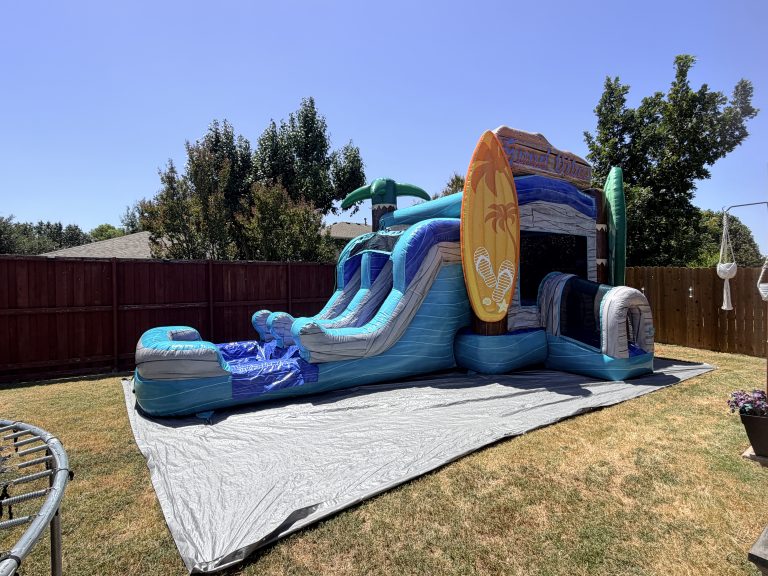
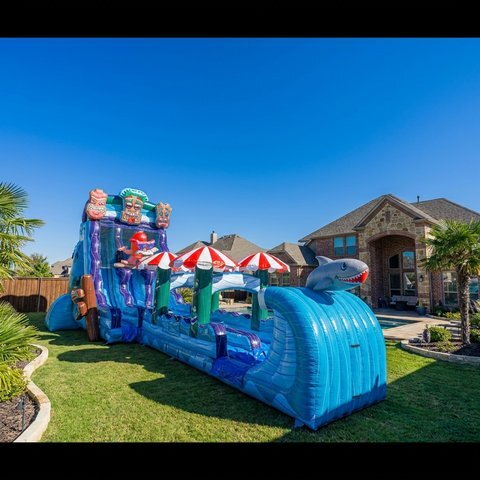
- Length. Water slides are long. The tower plus the chute plus the runout adds up, and you need working room beyond that for anchoring and for people to walk around.
- Overhead. A 20 foot unit needs more than 20 feet of clear air, because the unit moves and flexes. Look up before you decide where it goes. Tree limbs, eaves, gutters, string lights, and basketball hoops all matter.
- Power lines. Never place an inflatable under or near an overhead power line or service drop. This is not a clearance question to negotiate. Pick another spot or pick a shorter unit.
- Slope. Water slides need reasonably level ground. A yard that drains toward the setup area will turn into a bog.
- Gate access. Bigger units are heavier and bulkier to move. Measure your side gate and give the company the number before booking.
Wind, anchoring, and supervision
Height increases wind exposure. A tall slide catches more air than a low bouncer, which means anchoring matters even more and the weather call comes earlier. Ask what the unit’s manufacturer wind rating is, and be ready to shut down if conditions change.
Supervision also scales with height. A 15 foot slide can usually be run by one attentive adult positioned where they can see both the top and the bottom. A 20 foot slide really wants two people: one managing the queue and the climb, one watching the runout and clearing riders out of the way. Head-first riding, doubling up, and standing on the chute all become significantly more dangerous as height goes up.
Water and your yard
Taller slides typically need more water running for longer to keep the surface wet and safe, and all of it ends up somewhere. Expect a saturated area at the bottom. Plan the placement so the runoff goes somewhere you do not mind it going, away from patios, foundations, and flower beds.
Choosing honestly
Write down the actual ages of the kids who will be there. Not the ones who might come, the ones who will. If the middle of that range is under about eight, the 15 foot unit will get used more and cause fewer problems. If it is a group of ten-year-olds and up who have done this before, the 20 foot unit is the one they will remember.
Then check three things: the length your yard can give, the clear height above the spot, and the gate you have to get through. Those constraints answer the question more often than preference does.
Nobody has ever complained that a party’s water slide was only fifteen feet tall. Plenty of people have discovered on the day that a twenty foot unit did not fit, or that most of the guests could not climb it.
InflatableTX rents water slides across North DFW, including The Colony, Frisco, Plano, Lewisville, Little Elm, Denton, Flower Mound, and Carrollton. If you want help matching a slide to your yard and your guest list, you can see the slides we carry here.