Will a Bounce House Damage Your Lawn?
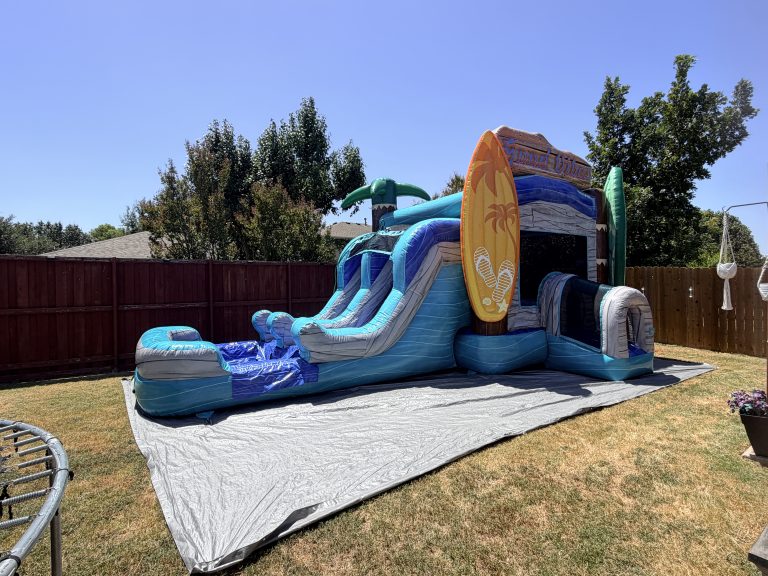
Usually yes, a little, and usually not for long. After a bounce house comes down you should expect a flattened, paler rectangle where it sat. In active growing season that typically recovers on its own within a few days to a couple of weeks. Lasting damage is a different thing, and it comes from three causes: leaving a unit down for a long time, standing water, and ruts. All three are avoidable.
What actually happens to the grass underneath
Two things at once.
The first is light. Grass under a large vinyl unit gets no sun for however long the unit is there. Deprived of light, blades go pale and yellow. It is the same effect as leaving a kiddie pool, a tarp, or a trampoline mat on the lawn for a day. It is a cosmetic response, not death.
The second is matting and compaction. The weight of the unit, plus dozens of kids landing on it, presses the blades flat and packs the soil slightly. Grass springs back from this readily. Soil compaction from a one-day rental is minor in most yards.
Neither of these is damage in the sense of killing turf. What you are looking at the next morning is grass that has been in the dark, not grass that is gone.
How long recovery takes
It depends mostly on the season and your grass type. In North Texas, bermuda and St. Augustine are common, and both are warm-season grasses that grow aggressively from roughly late spring through early fall. In that window, a yellow patch usually greens back up within about a week to two, faster with a little water.
The slower cases are predictable. Dormant winter grass does not repair itself because it is not growing, so a pale patch in January may sit there until spring. Grass already stressed by drought or extreme August heat has less in reserve. And a unit left down for multiple days rather than several hours pushes the outcome from yellow toward dead.
Duration is the biggest single variable you control. A four to six hour rental is very unlikely to cause anything lasting. A unit sitting on the same spot for a long weekend is a different story.
Water slides are the real risk
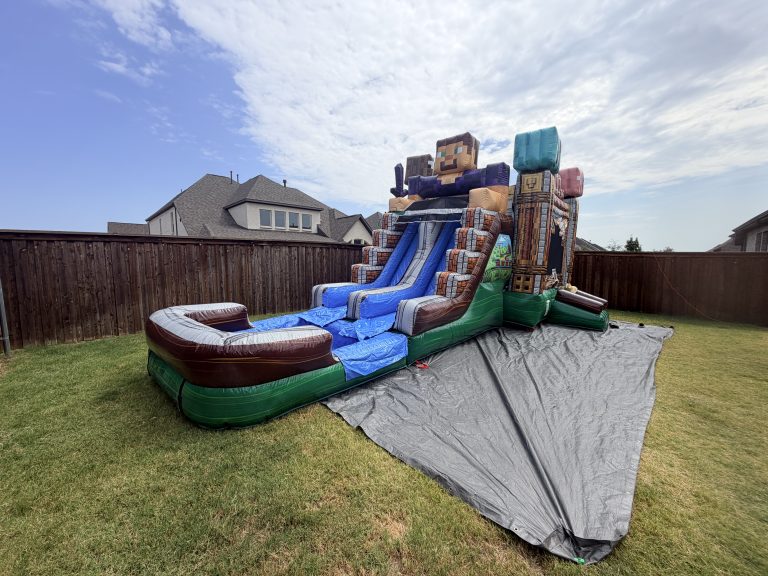
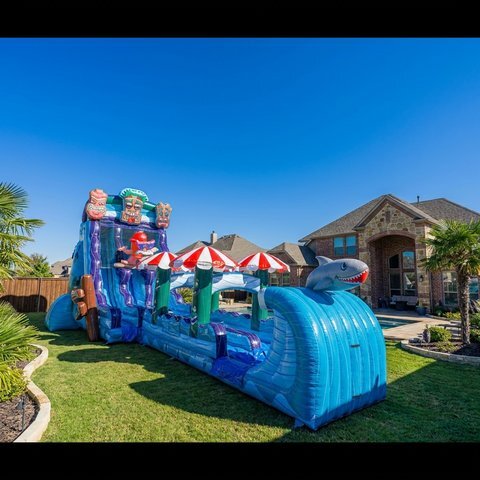
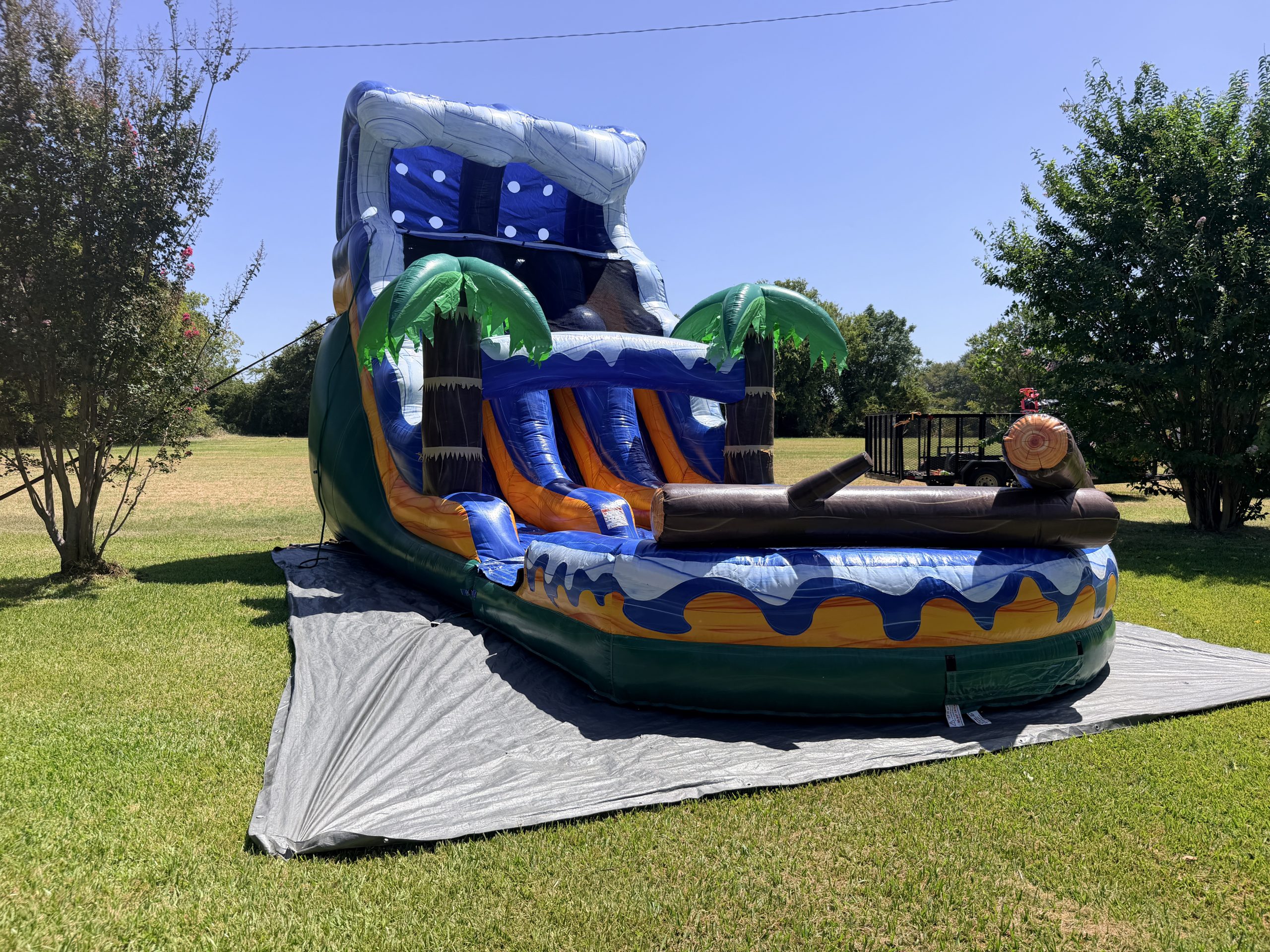
If you are renting a wet unit, this is the section that matters. A water slide runs a hose continuously for hours. That water pools at the bottom of the slide, saturates the soil, and does not drain until well after the party.
What that produces: a soft, muddy landing zone, ruts where kids run the same path over and over, and soil that stays waterlogged. Grass roots need oxygen, and sustained saturation suffocates them. Standing water sitting for days is also an invitation to fungal disease in warm weather.
The fix is placement. Put the slide so the runout drains away from the setup, not into a low spot. Avoid areas that already puddle after rain. Avoid running the water any longer than needed to keep the slide surface safely wet. And avoid setting up right against your foundation, patio, or flower beds, which have their own reasons to stay dry.
Sprinkler heads and irrigation
This is the damage that actually costs money, and it is entirely preventable.
Anchoring stakes go into the ground blind. A stake through an irrigation lateral is a repair. A sprinkler head crushed under a heavy unit or a sandbag is a repair. Low-voltage lighting wire and invisible pet fence wire are equally easy to catch.
Before delivery, walk the setup area and mark every head with a flag, a cup, or marking paint. Tell the crew where lines run if you know. It also helps to turn your irrigation controller off the night before and the day of, so the zone is not running under the unit and you are not softening the ground where the stakes go.
The tarp question
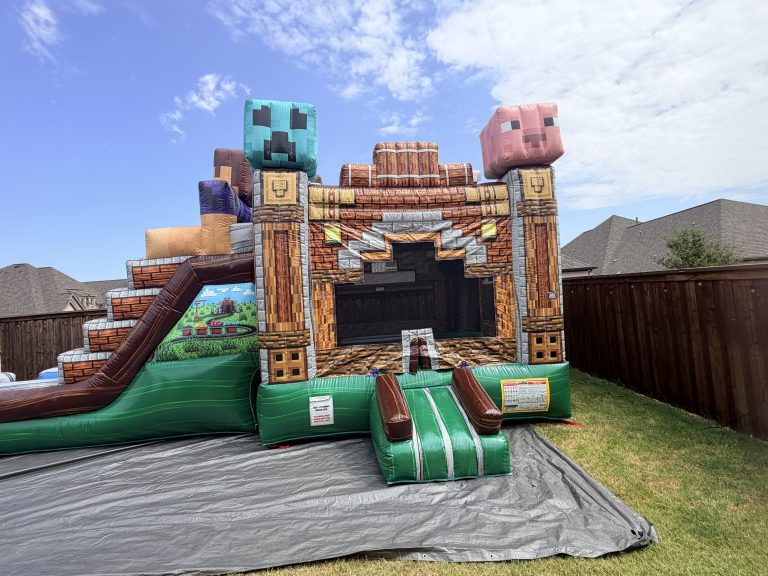
Most companies place a tarp or ground cloth under the unit. That is primarily to protect the inflatable from rocks, sticks, and debris that would abrade or puncture the vinyl, and it keeps the unit cleaner for the next family.
For your lawn it is a tradeoff. A tarp blocks light completely and traps heat and moisture underneath. Over a normal rental window that is fine. Over a much longer period, a tarp on hot grass accelerates yellowing. It is not a reason to refuse one, just a reason to lift and air the area out promptly after pickup.
Placement decisions that change the outcome
- Choose the flattest area you have. Slopes concentrate water and create ruts.
- Avoid the patch of lawn you are most proud of, and avoid newly sodded or newly seeded areas entirely.
- Stay off low spots that hold water after rain.
- Keep clear of shallow tree roots and bed edges.
- If you know where your septic field or leach lines are, do not stake into them.
- Consider a driveway setup if your lawn matters more than the surface does. Understand the tradeoffs: the unit gets anchored with weights instead of stakes, concrete gets hot in summer, and the area right outside the exit is unforgiving if a child comes out fast.
What to do afterward
Once the unit and tarp are gone, get sunlight and air on the area. That alone does most of the work.
Give it a light watering the same evening if the ground is dry, and normal watering after that. Do not drown it, especially where a water slide has already saturated the soil.
Rake the flattened grass lightly to lift the blades. Mow on your normal schedule, and avoid scalping the recovering patch.
If a water slide left ruts, level them while the soil is still slightly damp rather than after it bakes hard. If the area is still yellow after two weeks during growing season, a light application of fertilizer will help it catch up. Do not fertilize stressed, dormant, or drought-hit grass in the middle of summer heat expecting a quick fix.
The honest summary
A one-day bounce house rental on healthy, growing grass leaves a pale rectangle that fades out on its own. That is the normal outcome and it is worth the trade for most families. The things that turn it into real damage are long duration, hours of standing water, and stakes through irrigation. Mark your sprinkler heads, pick a level spot that drains, keep the rental to the time you need, and lift and water afterward.
InflatableTX is family-run and serves North DFW, including The Colony, Frisco, Plano, Lewisville, Little Elm, Denton, Flower Mound, and Carrollton. If you want to talk through where a unit should sit in your yard, you can have a look at what we rent.