Which Inflatable Suits Which Age Group?
Most standard bounce houses suit roughly ages three to twelve, but that range hides a lot of difference. Toddlers need small, low, enclosed units and their own turns. Early elementary is the age most residential inflatables are actually designed around. Tweens need more space and more challenge. And a mixed-age party is a scheduling problem, not a shopping problem.
Start with the label, not the marketing
Every reputable inflatable has a manufacturer’s placard with an age range, a rider limit and a weight limit. That is the real answer for any specific unit. Ranges vary between manufacturers because the units themselves vary in wall height, floor area and slide design, so a general rule is never a substitute for the label in front of you.
It is also worth knowing that some pediatric safety guidance recommends against inflatable use for children under six altogether, because of how often small children get hurt in collisions with bigger ones. Whether or not you follow that strictly, the underlying point holds: the smaller the child, the more separation and supervision they need.
Toddlers, roughly two to four
Little kids are not scaled-down big kids. They fall constantly, they cannot get out of the way, and they get overwhelmed quickly.
What matters at this age:
- A small footprint. A big open bounce floor is not a benefit here, it just means more distance to travel and more room to build up speed.
- A low entrance step. Toddlers cannot climb a tall inflatable threshold and will faceplant trying.
- Mesh side walls so you can see them the entire time from outside.
- Either no slide or a very short one with a gentle angle.
- An adult right at the door, or inside with them, the whole time.
Toddler-focused units and small combos exist for exactly this. Failing that, give the smallest kids their own dedicated turns while the older ones are eating, and keep the group tiny.
Early elementary, roughly five to eight
This is the sweet spot. Most residential bounce houses and bounce-and-slide combos are designed with this age in mind, and it shows: the wall height, the step, the slide angle and the rider limits all line up with kids in this range.
Good features for this group are a combo unit with a bounce floor and a modest slide, a basketball hoop, and simple obstacles like pop-ups or a climb wall. They have enough coordination to enjoy the slide and enough sense to take turns with a bit of adult prompting.
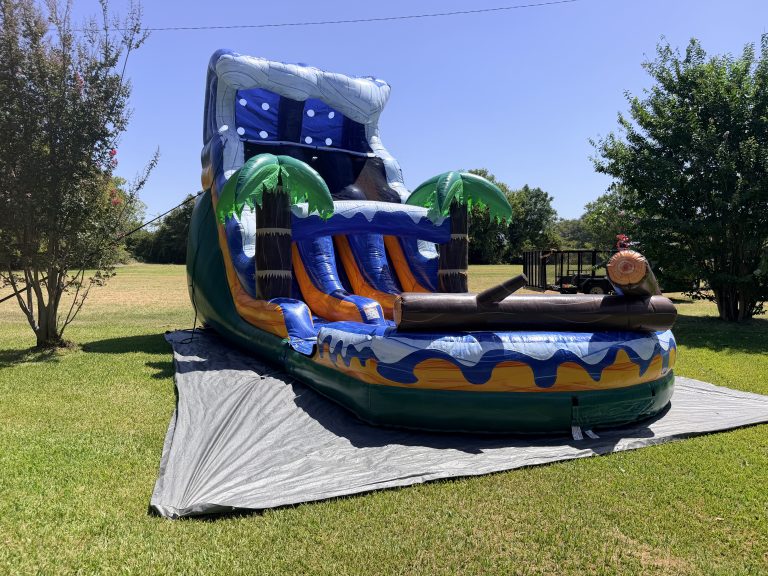
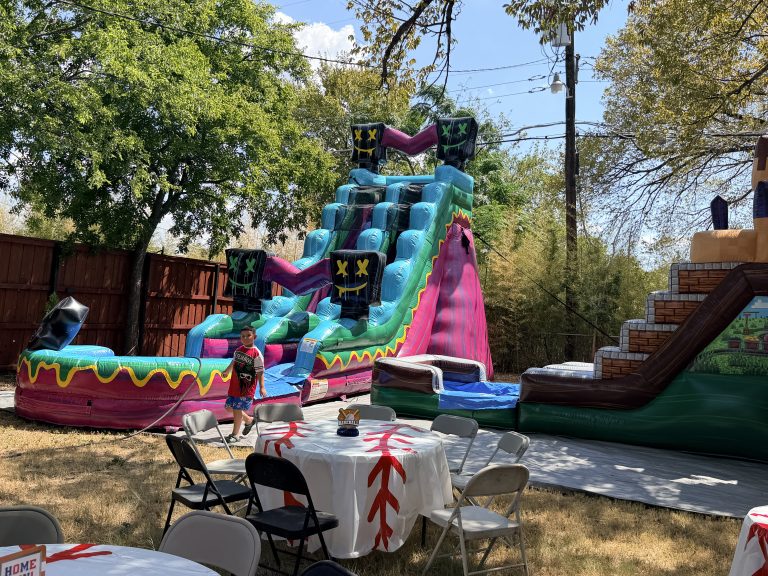
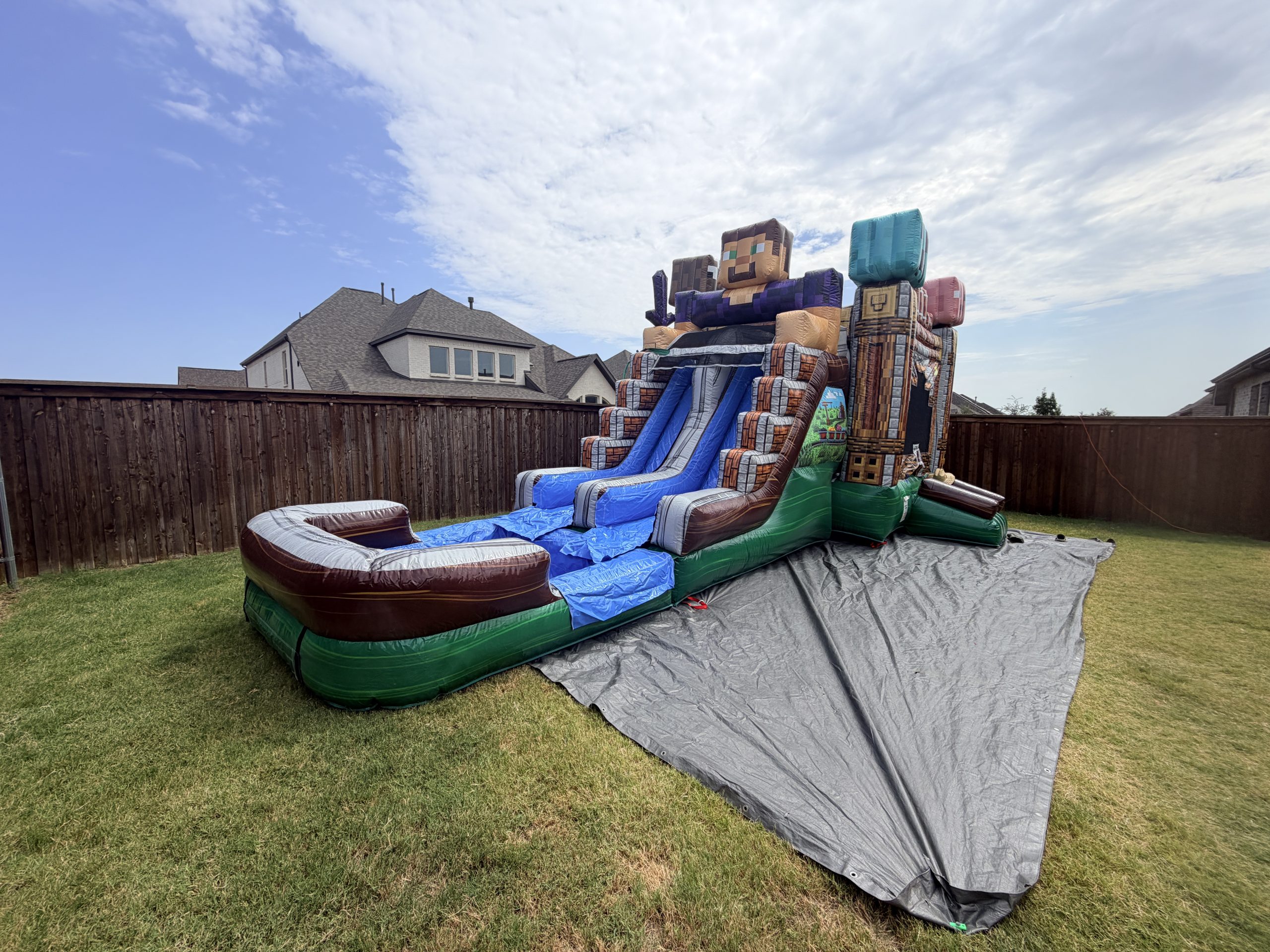
Water slides work well here too, but check the climb and the landing. A younger child on a tall, steep slide with a deep plunge pool is a mismatch. A lower slide finishing on a splash pad is a better fit and gets used far more.
Tweens, roughly nine to twelve
Older kids get bored with a plain bounce floor in about ten minutes. What holds their attention is challenge and competition: obstacle courses, dual-lane racers, taller slides, climb-and-slide combos.
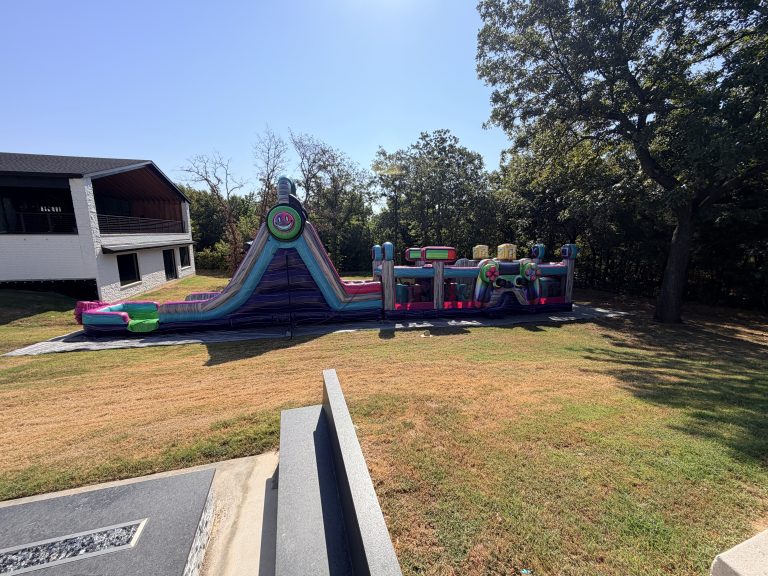
Two things to plan for. First, footprint. Obstacle courses are long, and a course that fits your yard on paper may not once you leave clearance on both sides. Measure before you book, and look up at branches and wires. Second, weight and force. Tweens bounce hard, and combined weight limits arrive faster than you expect. This is also the age group most likely to try flips or wrestling, so the rules need saying out loud rather than assuming everyone knows.
Teens and adults
Ask specifically before anyone big gets in. Many residential units are built for children and are not rated for teen or adult riders, and putting a grown adult in with kids reproduces exactly the size mismatch that causes most injuries. There are commercial units rated for adults, including obstacle courses and larger slides. If you want adults participating, say so when you book rather than finding out at the party.
Mixed-age parties
Most birthday parties are mixed. There is no single unit that serves a three-year-old and an eleven-year-old at the same time, and looking for one is the wrong approach. The workable options are:
- Rotate by size on a timer. Little kids first while the big kids are busy elsewhere, then swap. Five to ten minute turns, an adult at the door counting.
- Rent two units. A small toddler unit alongside a larger one solves the problem outright and cuts waiting in half.
- Give the youngest a different activity. A small water play setup or a shaded craft table keeps them happy while the older group has the inflatable.
The one thing not to do is let everyone in together and hope it works out. Mixed sizes bouncing at the same time is the most common setup behind the injuries that happen at parties.
Features worth thinking about in Texas
- Shade. A covered or canopied unit makes a real difference between May and September. So does placing the unit where a tree or the house throws afternoon shade.
- Wet versus dry. In summer heat, a water unit gets used far longer than a dry one. In spring and fall, dry units are usually the better call.
- Visibility. Mesh walls matter for every age group, not just toddlers.
- Entry and exit. Check what the kids land on when they come out, especially on a driveway setup.
The practical takeaway
Match the unit to the youngest and the oldest kids separately rather than trying to average them. Read the manufacturer’s label on whatever you rent. Keep toddlers in their own small unit or their own turns, put the five to eight crowd in a combo, give tweens something with a challenge, and run mixed groups on a rotation. If you tell your rental company the ages and the head count up front, they can usually save you the guesswork.
InflatableTX is family-run and serves North DFW, including Frisco, Plano, The Colony, Flower Mound, Little Elm and Denton. If you are matching a unit to a specific age group, you can see the inflatables we rent and ask us what suits your crowd.