Obstacle Course or Bounce House: Which One for Your Party?
A bounce house is open free play that suits younger kids, fits a small square of yard, and keeps a group busy for hours. An obstacle course is a structured race that suits older kids, needs a long strip of space, and runs in bursts with a line. If your guests are mostly under six, take the bounce house. If they are mostly eight and up and you have the room, the course will hold their attention longer.
What kids actually do in each
Inside a bounce house, kids invent their own game. Little ones bounce, fall over, laugh, and get back up. There is no goal and no turn-taking, which is exactly why it works for a three-year-old. Nobody loses.
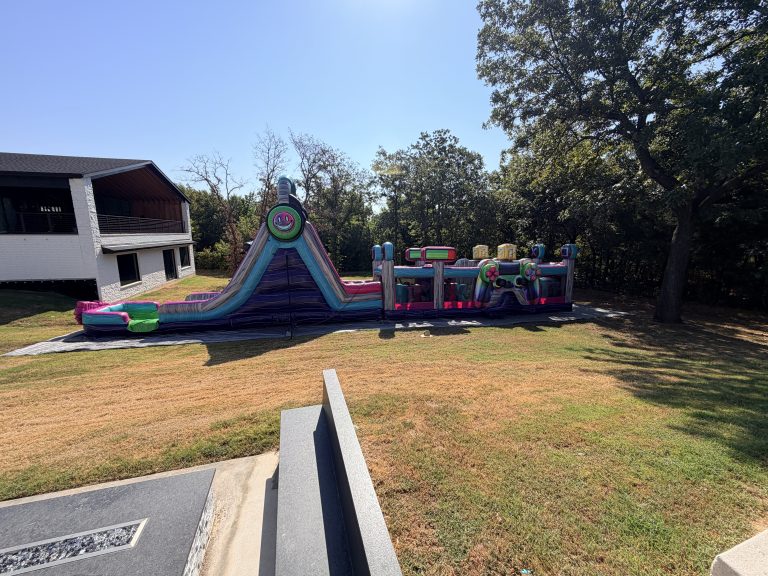
An obstacle course is a task. Crawl through, climb over, squeeze past, up the wall, down the slide, cross the line. Most are dual lane, so two kids race side by side. That structure is the appeal for older kids and the frustration for younger ones, who often stall halfway through a climb element and need help getting out.
Age suitability
Bounce houses have the wider age range, roughly the preschool years through early elementary, provided you separate riders by size. Mixing a four-year-old with a ten-year-old in the same bounce is the single most common way kids get hurt in one, because the bigger kid launches the smaller one without meaning to. Run groups by size and take turns.
Obstacle courses generally suit older kids because they require the strength to pull yourself up a climb wall and the judgement to wait your turn at the slide. Very young children can usually do a short course with an adult walking alongside, but they will not race it and they will not do it repeatedly.
Either way, the manufacturer prints rider limits on the unit itself: maximum number of riders, maximum weight per rider, and often a height range. Those numbers vary by unit and they are not suggestions. Read them on delivery and follow them.
Footprint and yard space
This is often the deciding factor, and it decides itself.
A standard bounce house is roughly square, commonly somewhere in the range of thirteen to fifteen feet a side, plus clearance around all four sides for the blower, stakes, and people walking past. A modest backyard usually handles one.
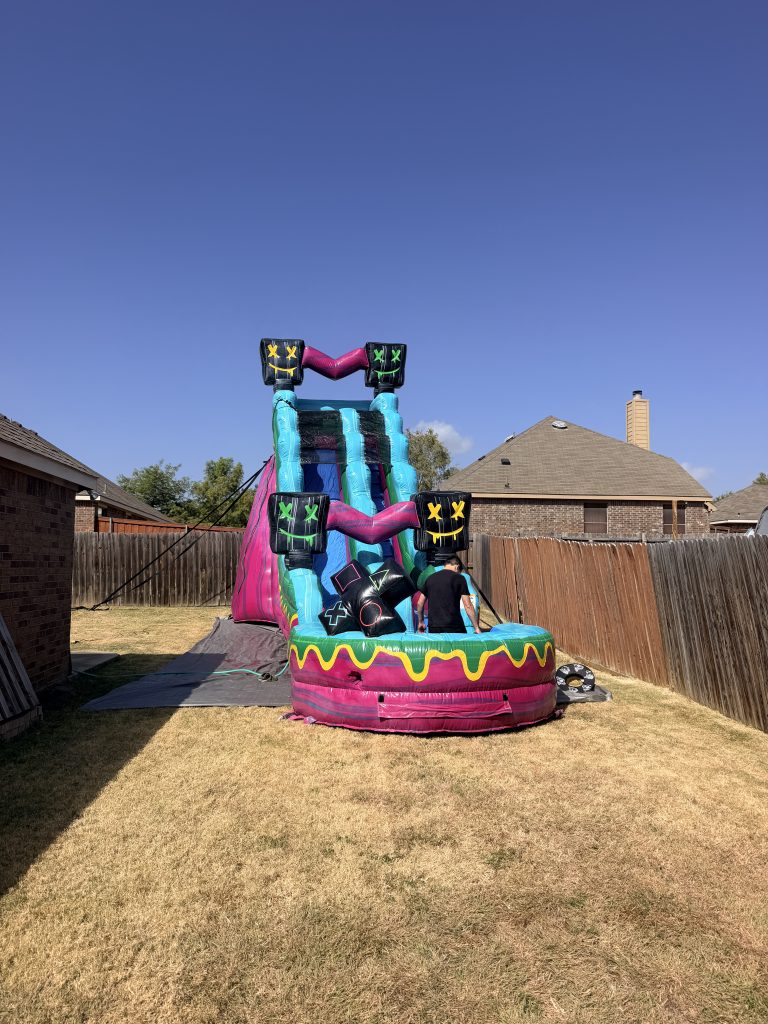
Obstacle courses are long. Many run thirty feet and up, and larger ones considerably more. They need a long, straight, reasonably level run with no tree in the middle of it. A yard that easily takes a bounce house may not take a course at all.
Ask the rental company for the exact footprint and the clearance they require, then measure your yard yourself rather than estimating. Measure the gate too, at its narrowest point including hinges and latch hardware, because a course arrives as a very large heavy roll.
How many kids can use each at once
A bounce house takes several kids simultaneously, within the posted rider limit. Everyone is playing at the same time, which is why it absorbs a crowd so well.
An obstacle course takes two at a time on a dual lane, sometimes with a second pair released once the first pair clears the early elements. That means throughput, not simultaneous play. Twenty kids and one course produces a line.
The line is not automatically bad. Older kids will happily queue to race their friend again. Younger kids will not, and a line of five-year-olds is a supervision problem in itself. Match the format to the patience of the guests.
Party length and pacing
A bounce house is background entertainment. Kids drift in and out of it across a three-hour party and it never really stops being used.
An obstacle course is an event. It burns bright for a focused stretch, especially with an adult running heats and calling winners, and then interest can dip. If your party is long, a course pairs well with a break for food and cake in the middle, then a second round.
Noise and supervision
Both units run on a continuous blower that stays on the entire time. It is a steady hum, loud enough that you will notice it and loud enough that your neighbour will too. That is the same for both.
What differs is the shouting. A course generates cheering and counting down and arguing about who won. A bounce house generates a lower, steadier noise.
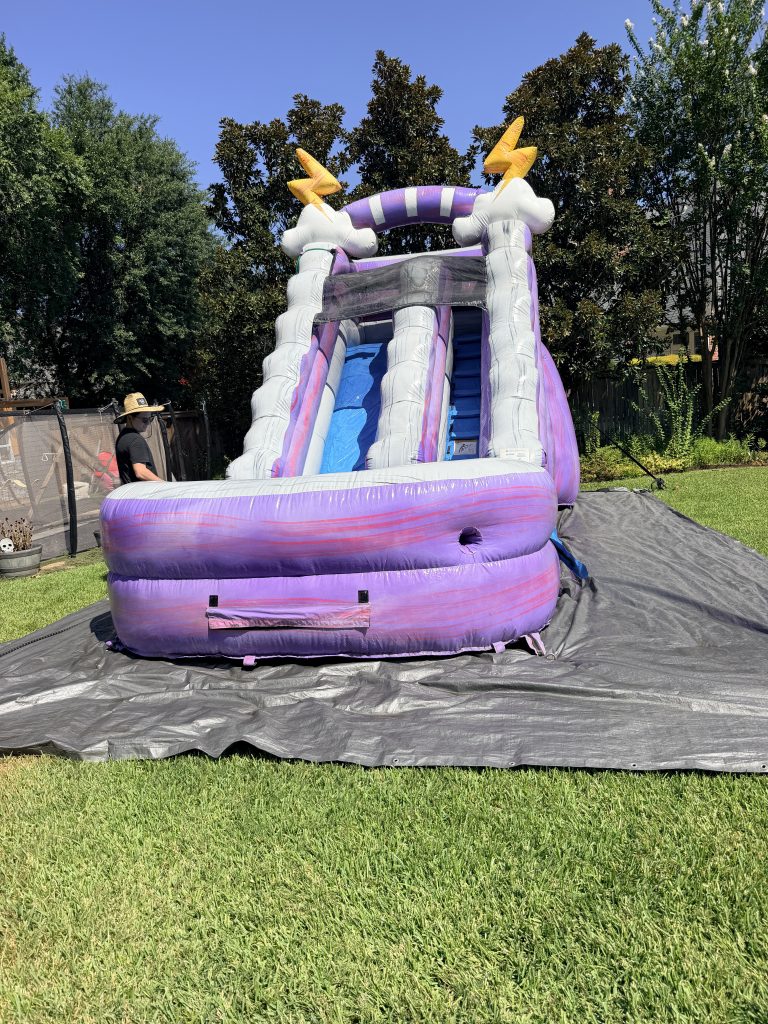
Supervision differs more. A bounce house needs one attentive adult who can see inside, keeping the group size-matched, keeping shoes and hard toys out, and stopping flips and roughhousing. A course really needs two adults: one starting racers so kids do not pile in on top of each other, and one at the slide exit clearing the landing before the next rider comes down. Head-first sliding is a serious injury risk on any inflatable slide, and it is the rule kids break most.
Assign those roles to specific named adults before the party. Everyone keep an eye on it reliably means nobody is.
The middle ground
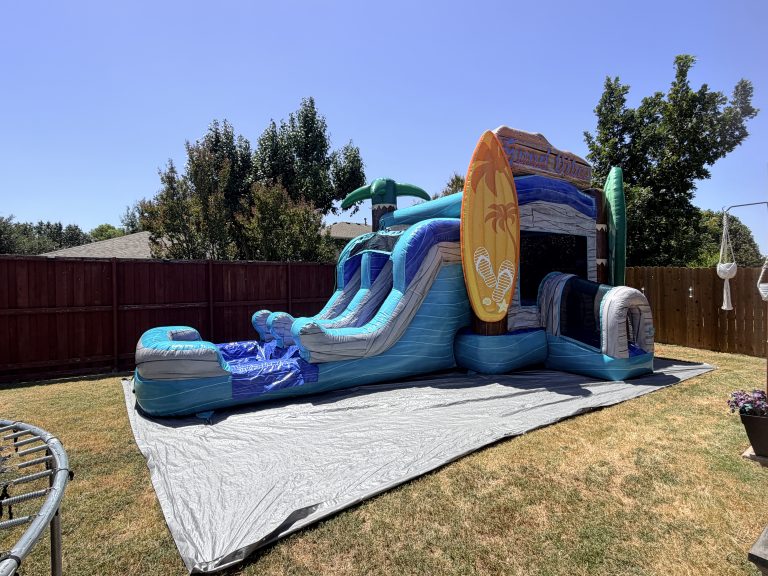
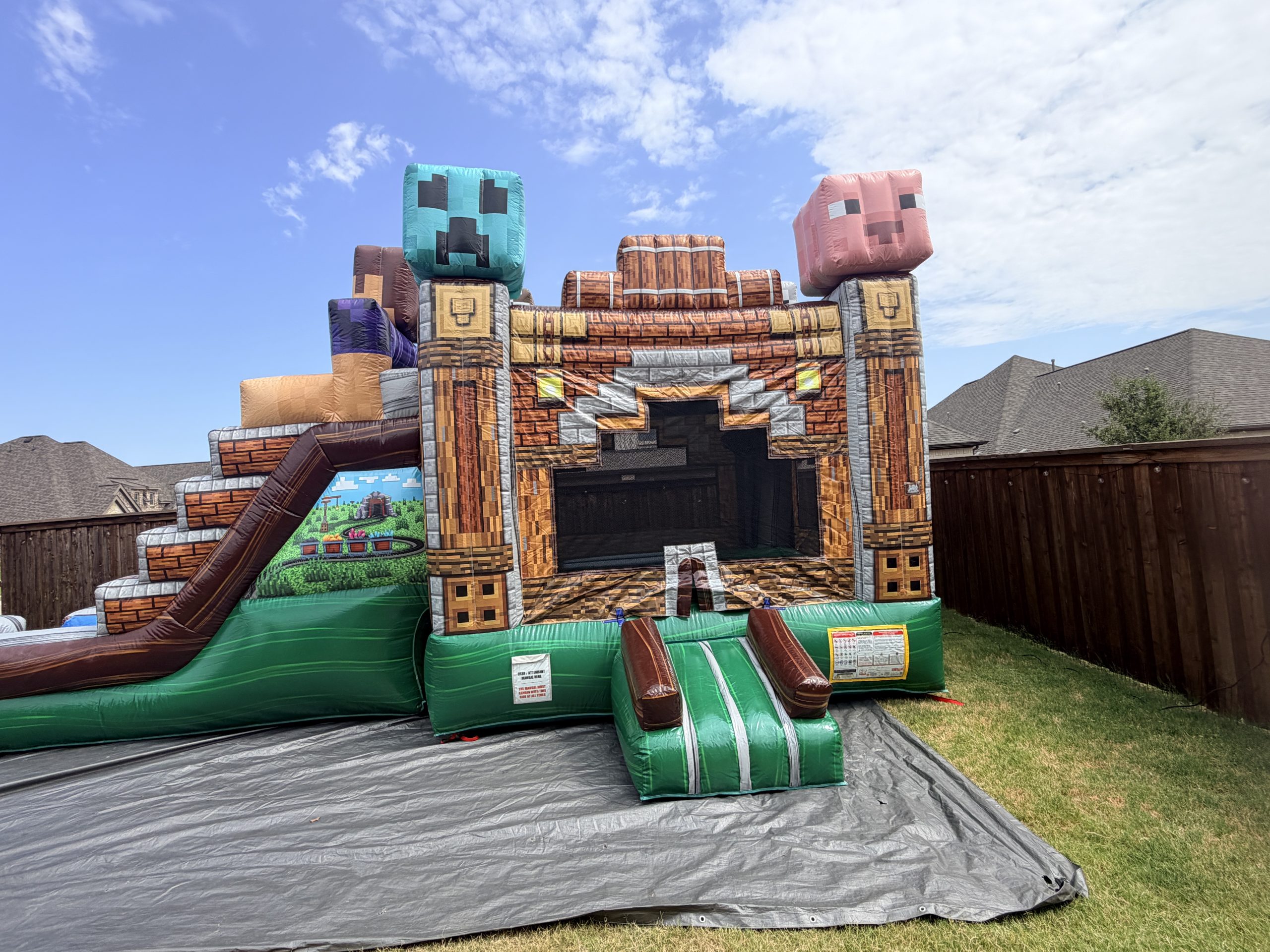
Combo units bundle a bounce floor with a slide and sometimes a climb or a basketball hoop in one footprint. They are a sensible compromise for a mixed-age crowd in a yard that cannot take a full course: little kids stay in the bounce area, bigger kids run the slide. Combos are also among the most requested units, so they book up early.
The practical takeaway
Let the yard rule out what it rules out, then let the ages decide. Mostly little kids, tight space, long party: bounce house. Mostly older kids, a long open run, and an adult willing to referee heats: obstacle course. A wide age spread and one adult on duty: a combo unit is usually the calmer choice. Whichever you pick, get the exact dimensions and rider limits from the company before you commit.
InflatableTX is a family-run business serving North DFW, from The Colony and Frisco to Lewisville, Little Elm, Plano, Denton, Flower Mound and Carrollton. If you are weighing the two, you can compare sizes and setups here before you measure the yard.