Grass, Turf, Concrete or Dirt: The Best Surface for a Bounce House
Grass is the best surface for a bounce house in most backyards. It takes stakes, which is the strongest anchoring available, it stays cooler than hard surfaces, and it is softer where kids land. Concrete is a solid second choice with proper weights. Artificial turf works with conditions attached. Dirt is workable but last on the list, and loose rock is not worth trying.
What actually makes a surface good or bad
People tend to think about surface in terms of comfort. It matters for four reasons, and comfort is only one of them.
- Anchoring. Can the unit be staked, or does it have to be weighted? Stakes in soil are stronger than any practical amount of ballast.
- Temperature. In North Texas summer, the surface under and around the unit drives how usable the party is between noon and five.
- Drainage. Standing water under an inflatable is a mess, and it matters even more with a water slide.
- Cleanliness and wear. Whatever is on the ground ends up on the floor of the unit and on the kids.
Grass
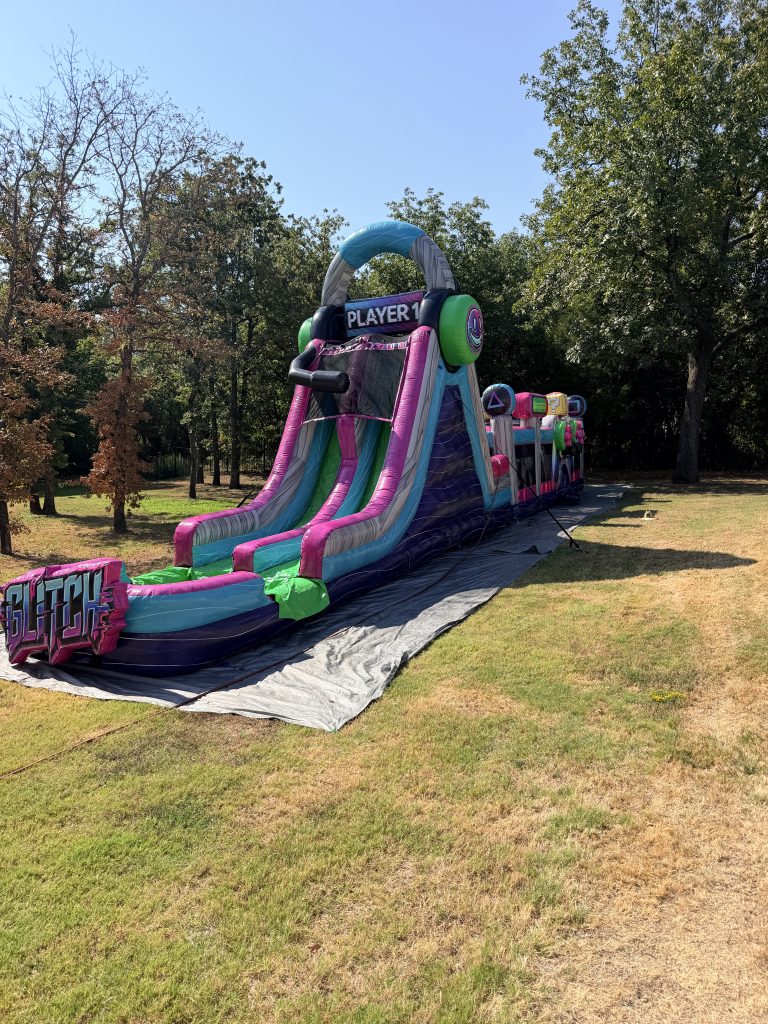
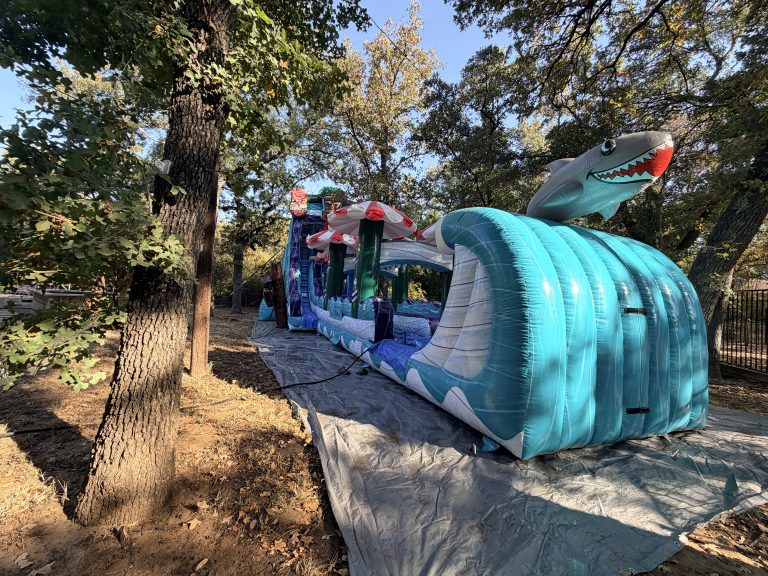
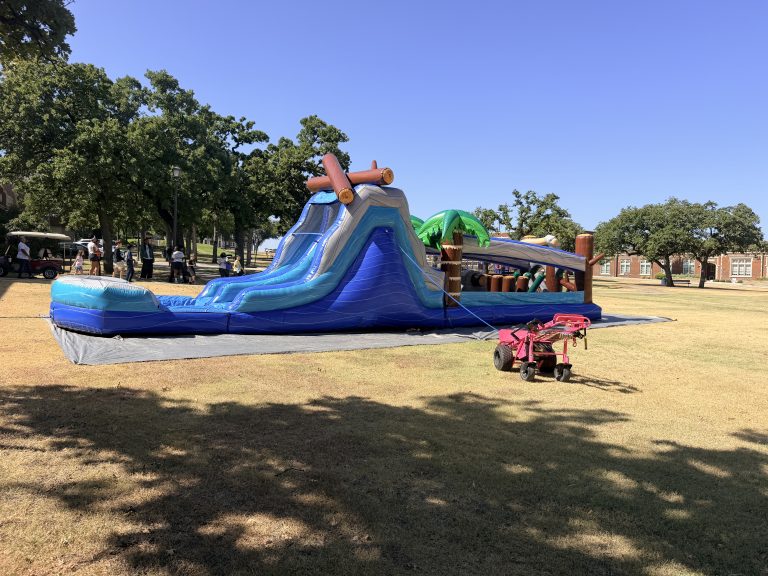
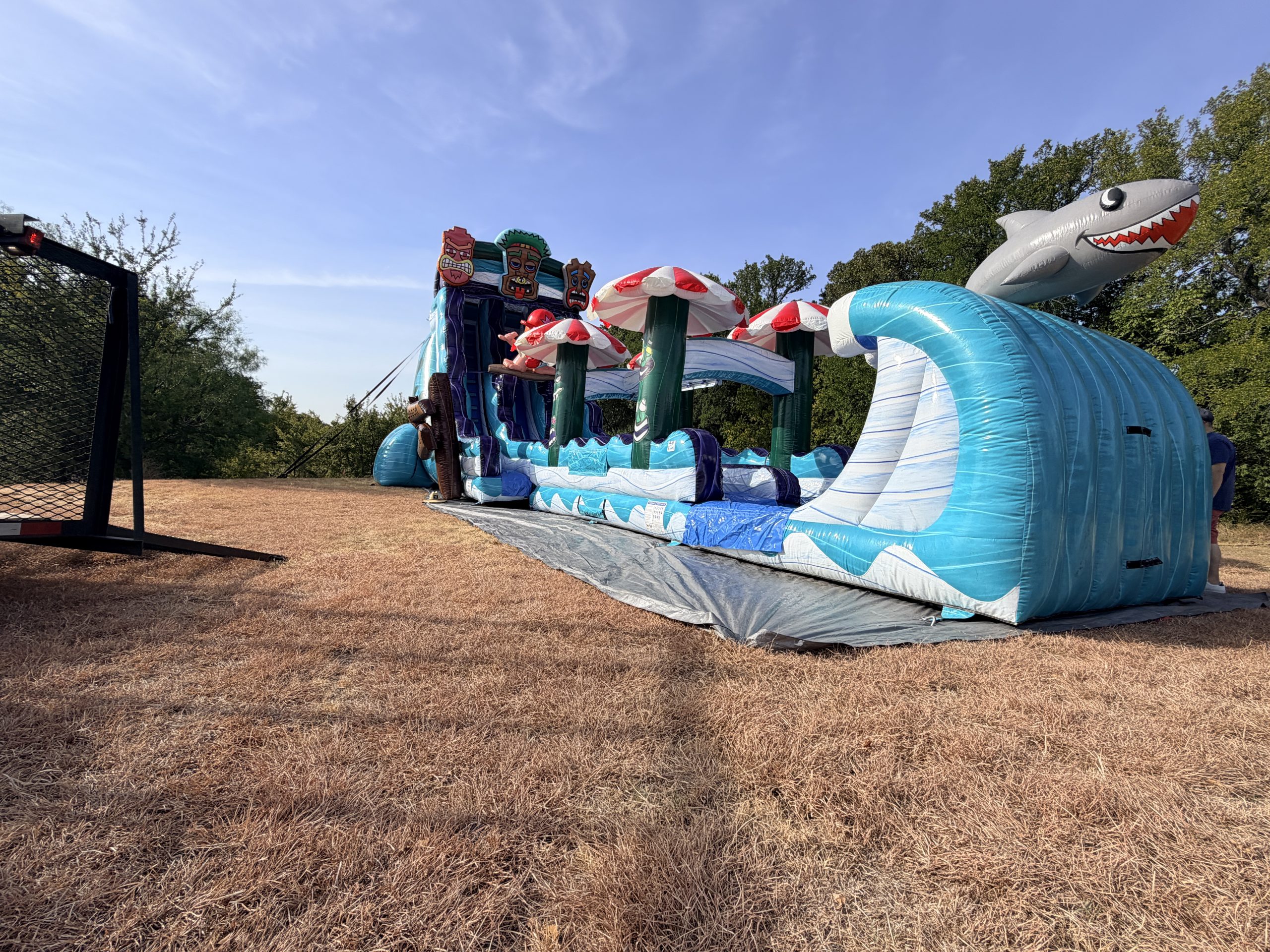
Natural grass is the default for good reason. Stakes drive straight into soil and hold with the ground’s own resistance, so anchoring is both stronger and faster. Grass runs cooler than any hard surface in direct sun. It absorbs the landing when someone comes out of the door at speed. It drains, and a wet slide is far more pleasant on turf that soaks water away.
The tradeoffs are real but manageable. Irrigation lines and sprinkler heads have to be located before anything is staked, so know roughly where yours run. In August, clay soil around here bakes hard enough that driving stakes is genuine work, which adds time. A unit sitting on grass all afternoon will flatten it, and you may have a pale rectangle for a week or two afterward. Wet grass tracks mud into the unit. And in this part of Texas, check for fire ant mounds before you pick a spot, because that is a party-ender.
Artificial turf
Turf looks like the best of both worlds and mostly performs like a hard surface. Most residential turf sits on a compacted base of decomposed granite or crushed rock, which stakes cannot penetrate properly, and driving stakes through turf tears the backing and the seams. So turf almost always means sandbags or water weights, and you should tell your rental company in advance.
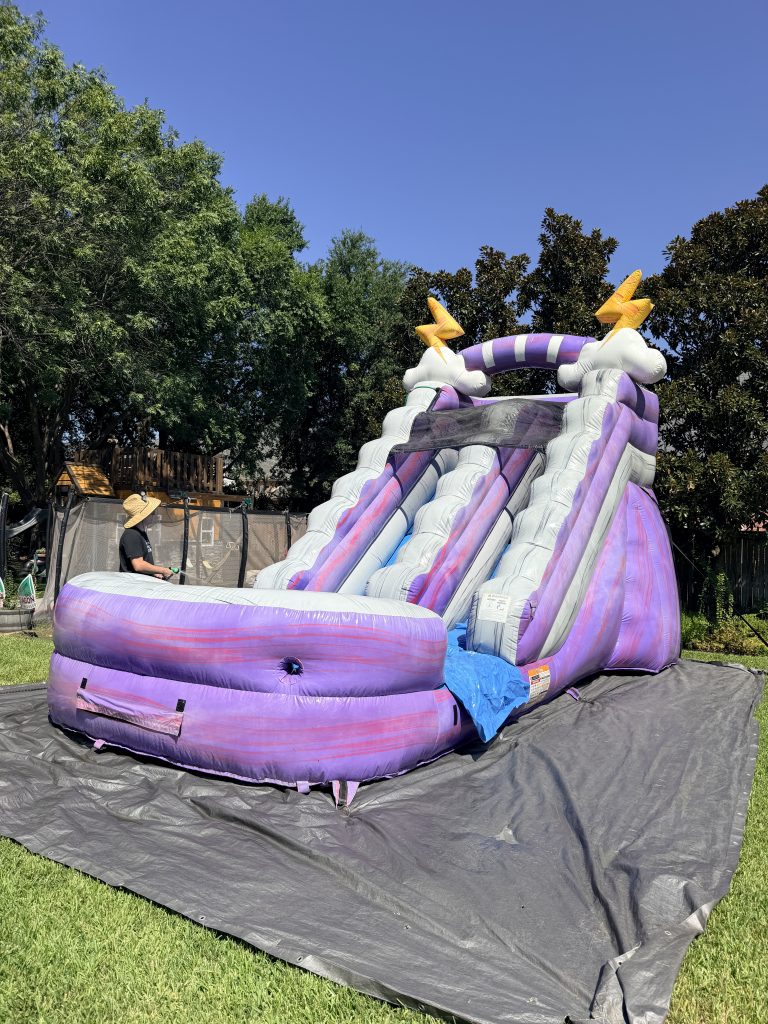
On the plus side, turf drains quickly, stays clean, and has no mud or ants. On the minus side, synthetic turf gets considerably hotter than natural grass in full sun, often hot enough to be uncomfortable on bare feet. Infill also migrates: those little rubber or sand granules find their way into the unit and then into shoes and cars. A tarp underneath helps with both wear and infill.
Concrete, pavers and asphalt
Hard surfaces work well when they are flat. Concrete is clean, drains fast, does not turn to mud, and leaves your lawn alone. It is also the most common option when a backyard is small or heavily landscaped.
Three things to manage. First, anchoring is entirely by weight, and every anchor point needs one, not just the corners. Second, concrete is abrasive, so a heavy tarp under the full footprint is mandatory and the unit should never be dragged. Third, slope: driveways are pitched for drainage, and while a gentle grade is fine, a noticeable one makes the floor uneven and the entry step higher than it should be.
Asphalt behaves like concrete but hotter, and dark asphalt in July can be brutal. If asphalt is your only option, aim for a morning or evening slot, or plan shade.
Dirt and bare ground
Bare dirt is workable and is often what you get at a rural venue or a house with a new build lot. Firm soil takes a stake well. The problems are dust and mud. Dry, loose dirt turns into a fine powder that ends up on every kid and inside the unit, and it is hard on the vinyl over time. Add water, from rain or from a wet slide, and you get mud that gets tracked in and stains.
Very loose or sandy soil is a different problem: stakes pull out of it more easily than they do out of firm ground, so anchoring may need to combine longer stakes with added weight. If your setup area is loose sand or freshly tilled ground, mention it when you book.
Rock, mulch, sand and decks
Landscape rock and mulch are not good surfaces. They are sharp or splintery, they move under the floor, and they are hard to tarp over reliably. Loose sand does not hold stakes and is abrasive. Wooden decks and balconies have no real anchor point and raise load and railing questions that are not worth answering. Indoors, in a gym or hall, is usually fine with weights, but ceiling height becomes the limiting factor and needs measuring first.
Quick comparison
- Grass: best anchoring, coolest, softest, drains well. Watch for sprinklers, ants and hard summer soil.
- Concrete or pavers: clean, flat, fast to dry. Needs weights, a tarp, and gets hot.
- Artificial turf: clean and well drained, but hot in sun, cannot be staked, and sheds infill.
- Dirt: stakes fine in firm soil, but dusty when dry and muddy when wet.
- Rock, mulch, sand, decks: avoid.
The practical takeaway
If you have a flat, clear patch of grass with room on every side, use it. If you do not, concrete is a fine second choice as long as the crew brings enough weight and puts a tarp down. What matters more than the surface itself is telling your rental company what you actually have before delivery day, so they arrive with the right anchoring and enough time. Walk the space beforehand, look up for branches and wires, and clear anything sharp.
InflatableTX is family-run and serves North DFW, including Frisco, The Colony, Little Elm, Lewisville, Flower Mound and Plano. If you are not sure what will fit the space you have, you can browse the units we rent and ask us before you book.