How Much Water Does an Inflatable Water Slide Use?
A water slide uses less water than most people picture. It is not filling and refilling a pool. It is a small continuous trickle down the slide surface to keep it slick, plus a landing pool that fills once and stays full. For most rentals the total is comparable to running a garden hose at part-throttle for the length of the party, and often less than a normal lawn irrigation cycle uses on the same yard.
How the flow actually works
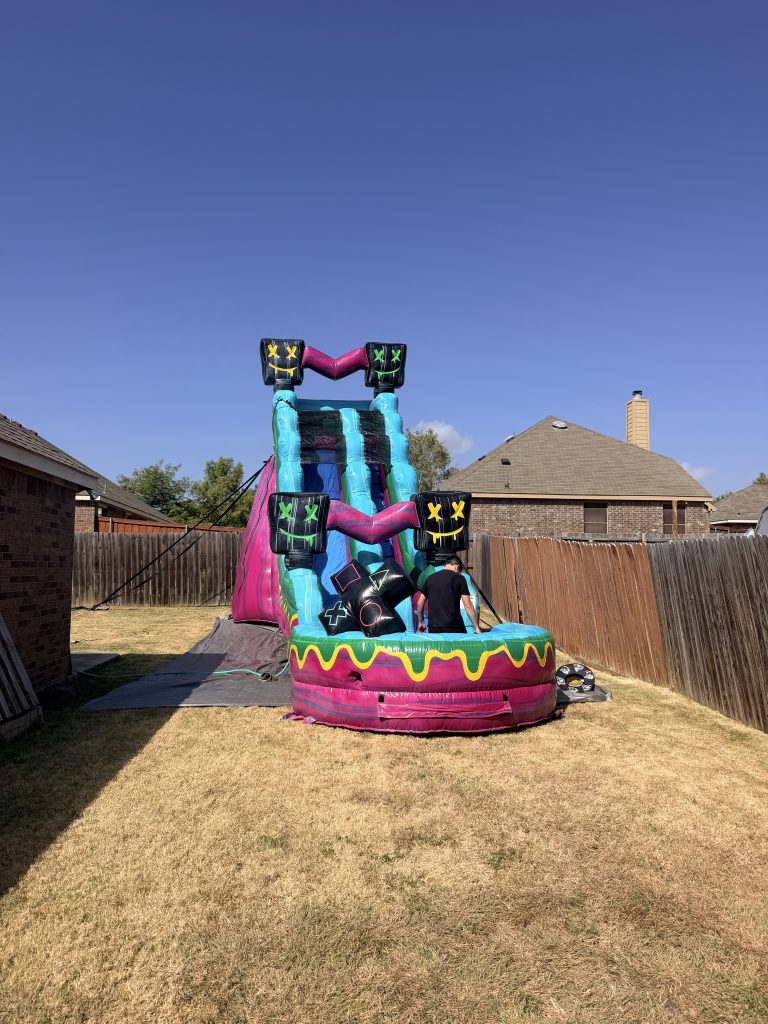
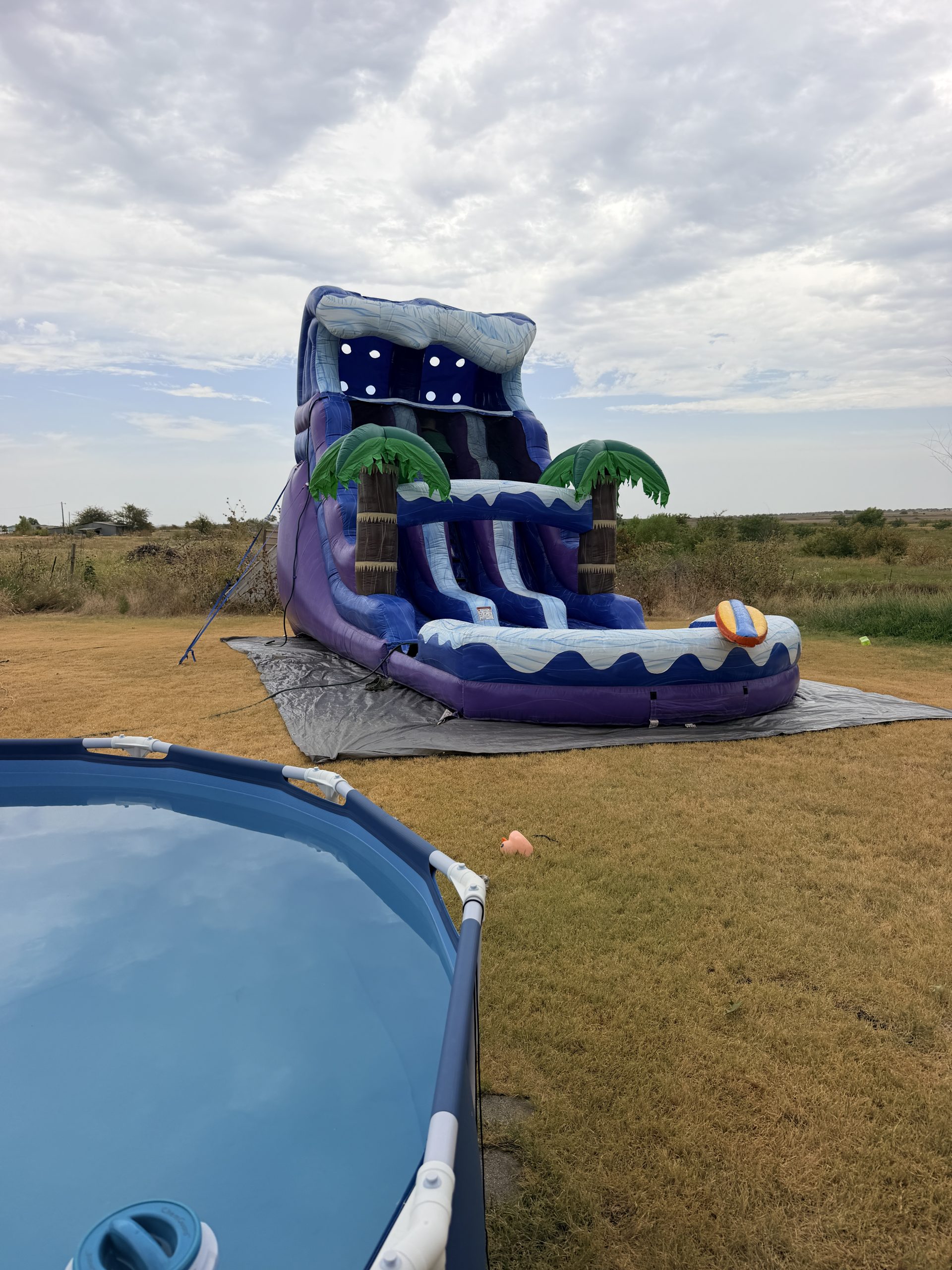
A hose connects to a sprayer tube near the top of the slide. That tube runs a thin sheet of water down the slide bed, which is the only thing that has to happen for the slide to work. Some units add a mister over the climb or the landing area. At the bottom, a built-in pool catches the water, and once it reaches its depth the excess spills out at the sides or through relief points.
So the water divides into two parts. There is a one-time fill for the landing pool, and there is the ongoing trickle. The trickle is small on purpose. Too much water makes the slide faster than it should be and floods the landing. The valve is usually nowhere near wide open.
Why nobody can give you an exact gallon number
Because it depends on your house. Flow out of a residential spigot varies with your water pressure, hose diameter, hose length, how many bends are in it, and how far the valve is opened. Two homes on the same street can differ noticeably. Add the size of the landing pool, the length of the rental, and how hot the day is, and any number quoted in an article is a guess.
If you want your own number, measure it. Set the hose the way you would run the slide, fill a five gallon bucket, and time it. If it takes a minute, you are at about five gallons a minute. Multiply by your rental hours and add the pool fill. That is a far better estimate than anything you will read anywhere, because it is your spigot.
For perspective before you measure: a single irrigation zone running its usual cycle across a yard generally moves more water than a slide does in an afternoon of use. That comparison is the one most people find reassuring.
Recirculating versus continuous flow
Some setups pump water from the landing pool back up to the top so the same water cycles through. It uses dramatically less water. The trade-off is hygiene and equipment. Recirculated water has been over kids, through grass clippings and whatever else ends up in the pool, and it needs a screen, a working pump and someone watching it. Plenty of operators avoid recirculation for exactly that reason and run low continuous flow instead, sending fresh water down and letting the overflow drain away.
Neither is wrong. Just ask which one your unit uses, so you know what you are agreeing to and where the water is going.
Where the runoff goes
This is the part worth planning, and it takes two minutes before the truck arrives. Stand in the yard and work out which way it slopes. Water will find the low spot and stay there. What you want:
- Runoff heading toward the street, a drain, or a broad open area of lawn.
- Runoff heading away from the house foundation. Repeated soaking next to a slab is not something you want, especially on our clay.
- Runoff not running along a fence line into the neighbour’s yard, and not into a shared low spot between two properties.
- Nothing pointed at a flower bed, a vegetable garden, or fresh mulch that will float.
North Texas black clay drains slowly. Water that would soak away in an hour somewhere sandy will sit on top here and turn into a mud patch. If your yard already has a spot that stays soggy after rain, that is exactly where you do not want the slide.
A quick word on the neighbour. If your lots slope together, or you share a fence at the low end, it is worth a heads up before the day rather than a conversation afterward. Most people are completely fine with it if they know in advance.
Protecting the lawn
Grass under the landing pool will come up matted and pale. Under a few hours of use, in most seasons, it recovers within a week or so once it gets sun and air again. What actually kills grass is standing water left for a long stretch, which is why draining the pool at the end matters more than the slide itself.
- Do not leave a full landing pool sitting overnight.
- When you drain, spread the water over a wide area rather than dumping it all in one place.
- Avoid new sod, freshly seeded areas, and anywhere over a septic drain field.
- Move sprinklers off that zone for the day so you are not watering twice.
Hose and spigot practicalities
- You supply the water source, so tell your operator where the nearest working spigot is when you book. Backyard access matters.
- Longer hoses lose pressure. If the spigot is far from the setup spot, mention it in advance rather than discovering it at delivery.
- Use a hose in good condition. A split hose at the coupling wastes more water than the slide does.
- A hose bib backflow preventer, the small brass fitting that screws onto the spigot, is commonly required and is a sensible thing to have regardless. Check what your city requires.
- If you are on a well with a pressure tank, think about whether it can supply steady flow for several hours. Mention it when booking.
- Try not to run the dishwasher, the washing machine and the slide at the same time if your pressure is marginal.
Watering restrictions
Many North Texas cities have year-round watering schedules and move through drought stages in dry summers. Those rules are usually aimed at irrigation, but restrictions can extend to other outdoor water use depending on the stage. Rules and stages change, and they differ from city to city, so check your own city’s current status before you book a wet unit in a dry summer rather than assuming what applied last year still applies.
The short version
- Slides run a small continuous flow plus a one-time pool fill, not a constant flood.
- Your actual usage depends on your pressure and hose. The bucket test gives you a real number in two minutes.
- Ask whether your unit recirculates or runs fresh flow.
- Plan where the runoff goes before setup, away from the foundation and away from the fence line.
- Drain the pool the same day and spread the water out.
- Check your city’s current watering rules in a dry year.
InflatableTX is a family-run company serving North DFW, including Frisco, The Colony, Plano, Little Elm, Lewisville, Denton, Flower Mound and Carrollton, and we will help you pick a setup spot that keeps the water where you want it. You can browse our water slides and tell us about your yard when you book.